Art of the Deal Make Them Think They Won

Painting by Natasha Wescoat licensed to Murals Your Way
When I began as an artist, I was really enjoying the experience of selling my work directly to people. Information technology was so much more than heady than hanging it on a wall in a gallery.
I had more command over my work, when it was available and where I could place information technology for auction. In that location was no middle human being involved and I preferred it that way.
But something was missing.
I wanted to find other avenues of making money from my work, only I wasn't sure how. I saw artists launching clothing lines, doing volume signings and licensing their fine art on collectables with well known brands.
I wondered how they were doing that. Did the visitor find them? Or did the approach come from the artist? Information technology appeared a daunting and incommunicable achievement.
"Those artists must exist veterans by now," I figured. "They have thousands of fans and their art has to be in galleries everywhere."
I had no thought how licensing worked or what was expected. Interestingly enough, it was simpler than it appeared to be, thought non without some work.
Extra income, actress exposure
When I began licensing, it was through the well known site, Art.com. Back in 2005, I used their Print-on-Need plan for artists, which ways they print orders as they are taken. They offered a decent typical market royalty to artists for every print sold and even later, a small-scale percentage on their framing, which they do in-house. Information technology was a great choice, considering I didn't take the equipment or funds to offer prints straight from my studio.
I then discovered other Print on Demand sites like Imagekind.com and FineArtAmerica.com. It would turn out to be a great choice for extra income likewise every bit exposure to future collectors. For a time, because of Art.com'south program, I was exposed to a broader audience than I could've encountered through my site lonely. This was invaluable to my business organisation and helped me grow as an artist and a business person. I even acquired several custom commissions from clients who wanted something 'larger' than what the impress sites were offering.
This was ironically a great style to also acquire new licensee clients. They institute my art through sites like Art.com and emailed me to ask how they could put my work on their products. Because of sites like Art.com and Imagekind.com, I have signed on with product companies that now characteristic my piece of work in stores like Bed Bathroom & Beyond, Target and art shops beyond the US.
It was wild when just ane mean solar day, opening upwardly my email to find requests on a regular footing. I built a larger post-obit and soon had regular paychecks coming in the mail!
Residual income architect and gap filler
What's cracking about licensing is that you are able to fill in the gaps when art sales are at a low or in a seasonal slump. This helps immensely when you demand to go the bills paid! If y'all want to exercise this full-time, then you take to expand your multiple streams of income. Licensing is a continual, residual income builder.
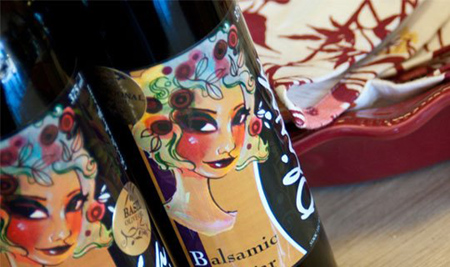
Painting by Natasha Wescoat licensed to Olivia Olive Oil Company
Licensing 101
So how does licensing work? What do companies await for? How can you pitch to clients? How do clients find you lot?
Showtime, licensing is a big business. Non just can you offer prints, but you have the potential to create a Brand. Everything from collectables to home decor to car decals. There are endless possibilities.
Companies work with manufacturing companies that deal with artists and designers to create products. You take to know how it works in order to not but expand your art brand, but to protect it also.
It'south worth registering the copyright of your work whenever you come up with a new design or drove. Here in the Usa, as in many countries, copyright is automatically granted to you as shortly as you create a piece of art, merely registering the copyright means that your ownership is a matter of public record, and makes it easier to defend your rights. For instance, if you want to bring a lawsuit for copyright infringement, y'all volition need to register your copyright. (More than information at the US Copyright Part FAQ.)
I recall one day, while on holiday in Florida, I spotted an artist friend'southward signature fairies on a t-shirt in Hot Topic. I then contacted her to notice out it was a copycat ripping off her piece of work! Considering she had her work protected under police, she was able to have that copycat's products down. You have to protect your work and make sure information technology'due south copyrighted with the Copyright office, not just to claim what's yours simply to protect it in the future.
What companies desire
Companies are looking for themes that they tin can employ across a range of products, with complementary images.
Then whether you are a fine artist, illustrator or graphic designer, it'south important that yous create your work in sets. I know information technology may seem unappealing if yous are a fine artist to be a niggling commercial in your efforts, but if you can offer sets of four, 5 or x in a collection of themes, they are able to brand more products or sets with it.
Another bonny thing to offering is patterns. If you are a designer or tin work in design, you could make patterns and designs that would work cracking to complement your original art images, or to license to material companies.
Typical licensing terms
1. Royalties
Companies will offering artists anything from 4% to 30% royalties on the cost of their products. It depends on the market and type of product. In that location are different types of royalty rates depending on the product. For example, typical royalty rates for prints and posters are around 10-15% whereas licensed gadget cases or similar tin can be around 4-seven%. Yous tin can negotiate these as well, call up! Effort to get the most you lot tin for what you're worth.
2. Contract length
Most licensing deals terminal from 1 to 3 years and will exist renewed or canceled depending on how well the deal is working out for you and them.
iii. Ownership of the work
Never ever let the company merits ownership of your art, take your ownership or give them exclusivity.
Unless you are creating an exclusive collection for that visitor that is split up from your other art, exercise not always permit a company to strength yous into a corner. You don't desire them to take your right to license the same art somewhere else. Make certain information technology's in the contract that they are not expecting you to simply license to them for that particular product.
I've plant many artists don't realize just how much control they have over their ain work, when it comes to art licensing. You not only have the ability to create opportunities but you can make the deals happen.
You don't need an agent. You don't need a manager. You just demand to acquire how to license your work, and brand it happen for yourself.
How to begin licensing your art
one. Practice the research
Read books, websites and blogs such as MariaBrophy.com, Theabundantartist.com and ArtsyShark.com on how artists can license their fine art. There is valuable information on the steps to follow, but more importantly – HOW to negotiate deals and also HOW to PROTECT your rights.
Know what the typical licensing rates are for fine art or whatever your craft is and also know what you lot need to protect. With this bones noesis, you'll be fix to negotiate on your own.
2. Know your market
Before you pitch to any companies or brands, yous should already know what your goals are and who you are selling to.
Are you a cartoonist? An opera songwriter? A fashion designer? A fine artist? A volume illustrator? Your genre of piece of work and your market will decide the best people to contact, because you'll know exactly what products yous want to launch or companies you will desire to piece of work with. E.g. Y'all shouldn't pitch to a company that only licenses fantasy art if you are a floral artist or to a children's book art company if you lot are a fine artist painting landscapes.
Also – see what other artists in your genre are doing. How are they creating licensing deals? Did they apply a certain site or exercise certain things that led to that? Who do they piece of work with? Accept note of these things.
3. Make the pitch
You can create your own opportunities. Make yourself known to companies you want to work with. Enquiry their sites, their make and then write a thoughtful letter describing your involvement and brand a brief introduction of yourself.
Offer links to your piece of work, every bit sometimes attachments are marked spam or they won't open. Bear witness them how THEY can benefit. Not merely that you want to piece of work with them. Bear witness how you two fit. Link to the best examples of your piece of work that complement what they already license.
4. Create a plan
Y'all should make it a regular plan to pitch to companies either monthly or every few months. Create a listing of companies yous've contacted and ones you want to contact.
v. Mock-up a catalog
If you accept the skills, create a portfolio of products that your fine art would be dandy on. If you want to practice toys, create some with your work. If you want to sell yourself as a voiceover, create pretend commercials or jingles that you'd do.
The thought is to help them envision your piece of work already on their products. This can take a few months to create and put together, only it's an important part of your 'sell'.
Most people keep these offline or available every bit a downloadable file, or you tin make this a public portfolio on your site – even meliorate!
6. Follow upward
Give it two weeks to a month before you contact once more, asking if they have gone over your email. This is good to show that you are serious about your proposal and as well to remind them, considering they might be also busy to keep upwardly.
seven. Use social media
If you actually want to make a business opportunity happen, connect to the people who tin can go far happen – and social media is a great style to do this. Right from the showtime of my carreer, I've plant it important to actually connect with people and exist a 18-carat source of friendship and value.
Follow them on Twitter. Talk to them on Facebook. I've plant huge opportunities because of MySpace and eBay, 2 places you'd NEVER expect to brand a connectedness. People are people. We are all normal. Nosotros are all using the internet these days, and non but for business.
Connect on a personal level and befriend others! Don't await that your opportunity to happen overnight. You have to provide them with something of value likewise. Information technology's a requite and take space.
viii. License the work yourself
There are lots of websites that will aid yous explore and develop your offerings, such equally Imagekind.com, Artistrising.com, Zazzle.com, Glossi.com, iStockphoto.com and Blurb.com.
Some of my friends who are now famous authors got publishing deals BECAUSE of their success in self-publishing. Another very famous example is Justin Bieber, whose fame began on YouTube when he was just a little male child performing on instruments and singing! The potential options are ENDLESS!
If yous want to license your work, search the web for your particular craft. At that place is leap to be a site and software bachelor for you to start making the product happen today.
Over to you
So what do you retrieve nigh licensing?
Do you plan to license your work or produce your own products?
About the author: Natasha Wescoat has been a total-fourth dimension creative person since 2004, living and working in Michigan with her two children and extended family. Her art is seen in publications and licensed products across the U.s. and at WescoatFineArt.com
Source: https://lateralaction.com/articles/art-licensing/
0 Response to "Art of the Deal Make Them Think They Won"
Post a Comment